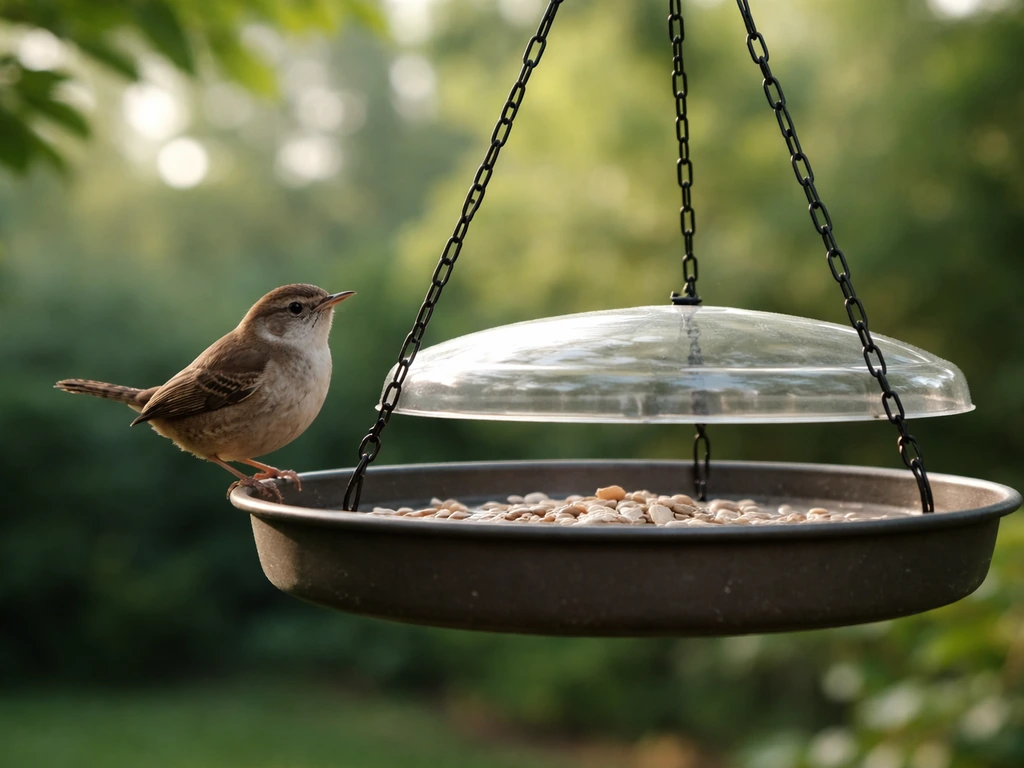
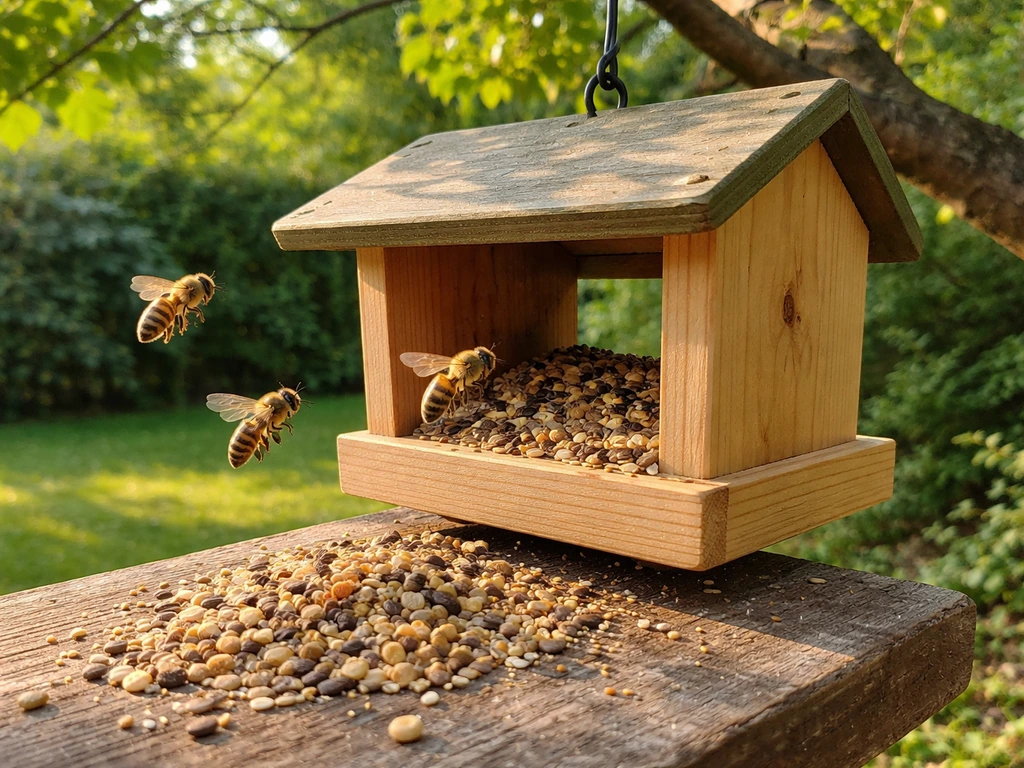
Bees do not eat bird seed. Do house wrens eat bird seed too, so keeping feeders clean and dry helps discourage unwanted foraging by other wildlife. They are not after the seeds themselves and will not carry them off or damage them. When you see bees at a feeder, they are almost always hunting for something else: sugary residue, moisture, pollen-like dust from seed hulls, or insects hovering near the feeder. In a Reddit thread, commenters discuss how bees may harvest protein dust or pollen-like material from bird seed, especially when pollen is scarce blank" rel="noopener noreferrer">pollen-like dust from seed hulls. It is a foraging detour, not a seed raid. That said, a lot of bee activity around your feeder is often a signal that something needs cleaning or adjusting.
Do Bees Eat Bird Seed? What to Do If You See Them
What bees are actually after at your bird feeder
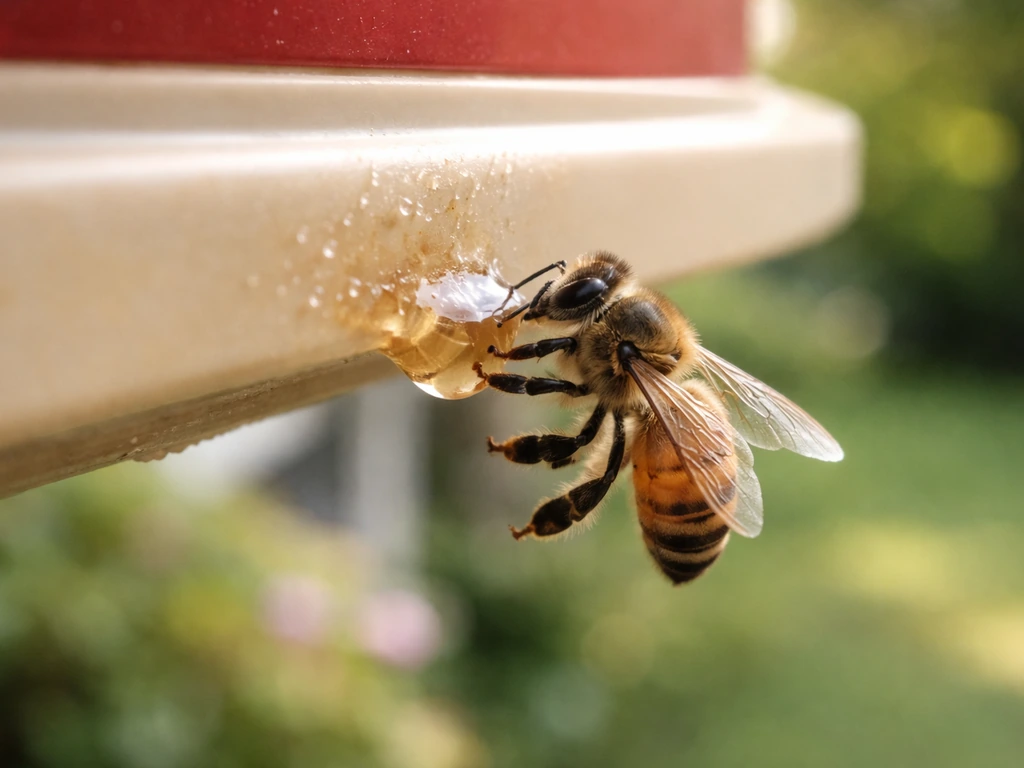
Bees are wired to find sugar and protein, and they are surprisingly flexible about where they look. At a bird feeder, a few things can trigger that search. Sugary liquids are the biggest draw: spilled hummingbird nectar nearby, fermented seed residue, or even the sweet smell of wet grain can pull bees in. Honey bees and bumblebees both respond strongly to scent cues when they are scouting for food, and a feeder that has accumulated damp, slightly fermented seed can smell like a reward worth investigating.
The second thing bees look for is protein, specifically pollen. Do wrens eat bird seed? Yes, they often nibble seed and may visit feeders depending on what is available pollen. When natural pollen sources are scarce (late summer, early fall, or during a drought), some bees will forage on grain dust and seed hull fragments as a pollen substitute. Online beekeeping communities have documented honey bees doing exactly this, hauling off fine seed dust the same way they would collect pollen. It is not their preference, but it happens when options are limited.
Water is the third driver. Bees need water to regulate hive temperature and dilute honey, and a wet seed tray or drip-soaked platform feeder can look like a water source. If you have noticed bees hovering at the tray rim rather than on the seed itself, water is likely the draw.
How the type of bird seed changes bee interest
Not all seed types attract bees equally. The key factors are oil content, fragrance, moisture retention, and how quickly the seed goes stale or wet.
| Seed Type | Bee Attraction Level | Why |
|---|---|---|
| Black oil sunflower | Moderate to high | High oil content, strong scent, real sunflower connection — bees are hardwired to forage on sunflower pollen and nectar, and the seed smell can trigger that response |
| Nyjer (thistle) | Low to moderate | Nyjer contains roughly 40% oil and has a mild scent; bees may investigate dust or hull fragments but rarely linger |
| White millet | Low | Low fragrance, low oil, minimal residue — less appealing to bees unless wet and fermenting |
| Mixed seed blends | Moderate | Depends heavily on the sunflower and milo ratio; the more sunflower in the mix, the higher the bee interest |
| Sprouted or wet seed | High | Fermentation produces sugars and alcohols that strongly attract bees, wasps, and other insects — this is the scenario that creates real pest problems |
| Suet and pellets | Low to moderate | Suet with fruit or honey additives can pull bees in; plain suet with no sweeteners is rarely a problem |
The bottom line: dry, fresh sunflower seed will occasionally draw a curious bee, but wet, sprouted, or fermented seed of almost any type becomes a magnet. Keeping seed dry is the single biggest lever you have.
Bees vs wasps vs other insects: telling them apart at your feeder
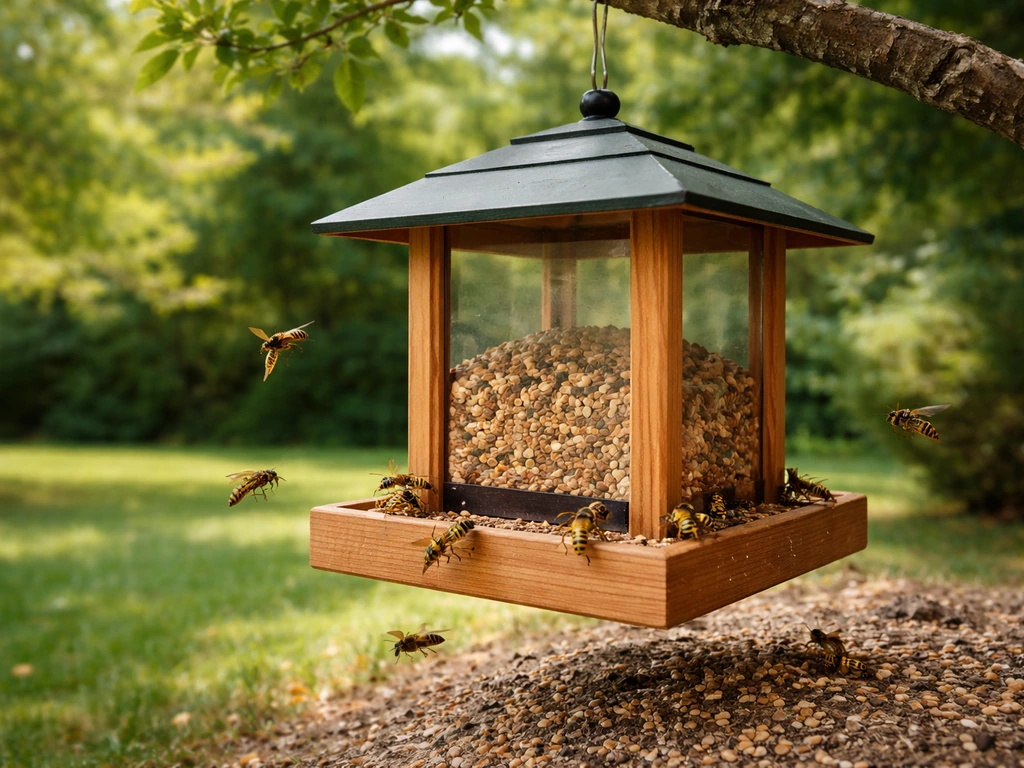
This is worth getting right because the fix for a wasp problem is different from the fix for a bee problem. Wasps can be attracted to feeders for similar reasons, especially when seed or residue gets wet or fermented wasp problem. Bees are fuzzy, relatively slow-moving, and tend to hover methodically. Wasps are smooth and slender with a pinched waist, move more aggressively, and often chew at seed or feeder edges rather than hover. If you are seeing a lot of insects and they are behaving aggressively toward birds or each other, they are almost certainly wasps, not bees.
Wasps are drawn to bird feeders for protein (insects, seed residue, bird droppings) and sugar, and they are much more of a practical pest problem than bees. If you have a wasp issue at feeders, that is a separate challenge worth addressing directly. Butterflies and other pollinators occasionally visit for water or mineral residue but are rarely confused with bees. Ants (another common feeder visitor) are after the seed itself and spilled fat or sugar, and they are a different class of problem entirely.
A quick field check: look at body shape and behavior. Fuzzy and methodical equals bee. Smooth, aggressive, and chewing equals wasp. Tiny and trailing a line equals ants.
When bee visits are normal vs a sign that something is wrong
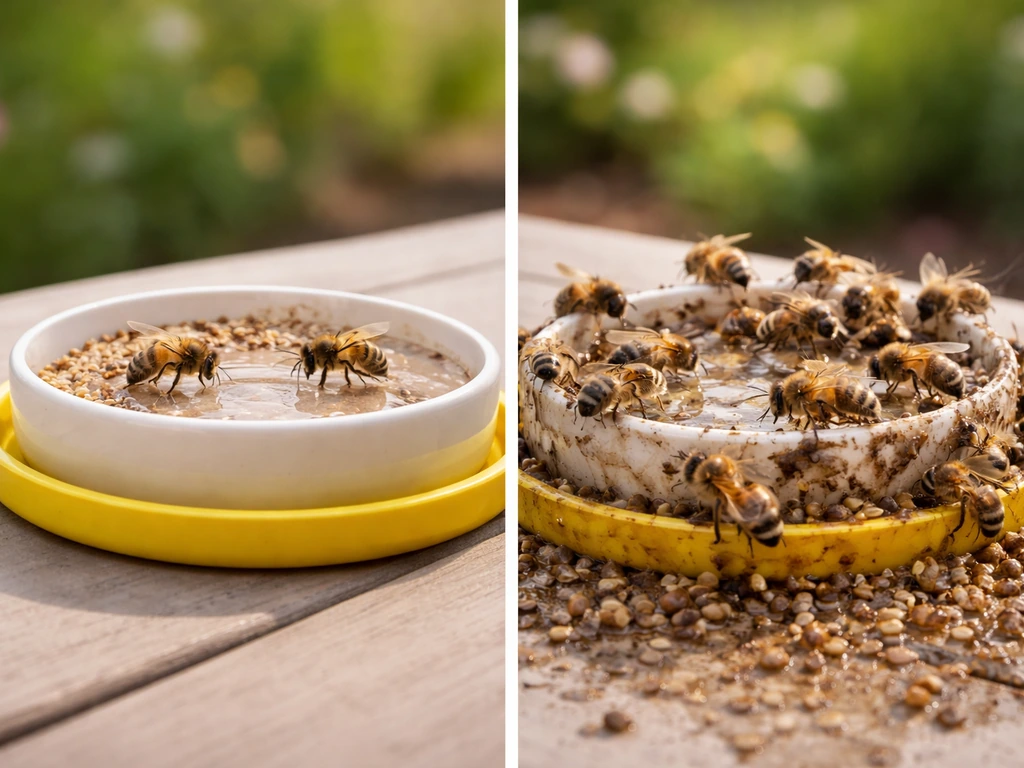
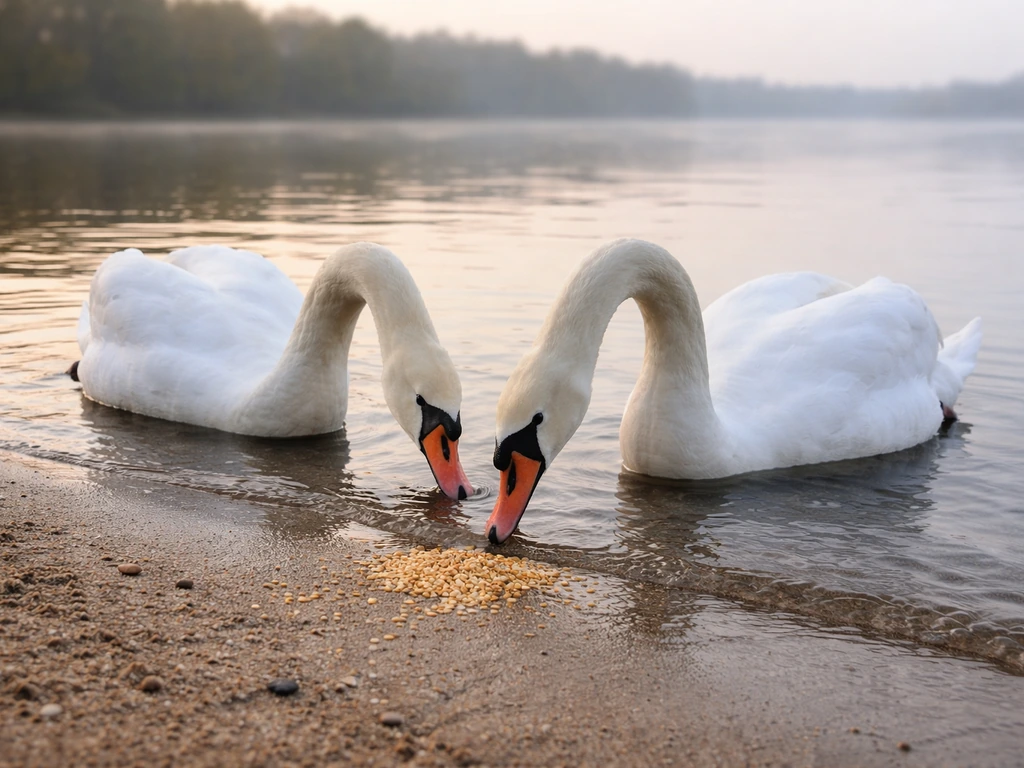
One or two bees occasionally investigating a feeder, especially during late summer when pollen is scarce, is completely normal. They will likely move on once they confirm there is no real reward. Do swans eat bird seed, and if they do, you may see them visit the same spots where other birds feed. You do not need to do anything.
The scenarios that should prompt action are different. You may see swallows hunting over open air near feeders, but they are not the kind of birds that typically eat loose bird seed from a tray. Heavy, sustained bee activity (a dozen or more bees returning repeatedly) usually means one of three things: wet or fermenting seed is sitting in the tray or bottom of the feeder, sweet liquid from a nearby hummingbird feeder has dripped or spilled near your seed feeder, or the feeder has not been cleaned in a while and has sugary residue and mold building up. Moldy and wet seed is a real sanitation problem regardless of bees: it can grow salmonella and other pathogens that harm birds. So heavy bee traffic is a useful early warning that your feeder hygiene needs attention.
What to do right now
Step 1: Empty and inspect the feeder
Pull out all remaining seed and check the bottom of the feeder and any trays for wet, clumped, or discolored seed. Wet seed smells slightly sour or musty. Discard it completely rather than mixing it back with dry seed. Mold spreads quickly, and even mildly damp seed can become a problem within 24 to 48 hours in warm weather.
Step 2: Scrub the feeder
Mix a cleaning solution of one part bleach to nine parts water (roughly half a cup of bleach per gallon). Scrub all surfaces with a stiff brush, paying attention to crevices, perches, and the bottom tray where seed dust and droppings collect. Rinse thoroughly and let the feeder air dry completely before refilling. Aim to do this weekly during warm months, or every two weeks at minimum. If you see sick birds, take the feeder down for one to two weeks and clean it before putting it back.
Step 3: Rake up the area below the feeder
Hulls, spilled seed, and bird droppings under the feeder are a magnet for insects and mold. Rake or shovel them up and dispose of them. Do not leave accumulations sitting for more than a few days, especially in summer. This step alone makes a significant difference in insect and rodent pressure.
Step 4: Adjust feeder setup to reduce moisture
If your feeder is getting rained on or sits in a spot with poor airflow, move it to a more sheltered location or add a dome-style weather guard. Tube feeders with drainage holes at the bottom are better than platforms in wet climates because they let moisture escape. Avoid filling feeders to the brim in rainy weather: smaller, more frequent fills mean less seed sits long enough to get wet.
Prevention checklist for ongoing bird seed hygiene
- Store bird seed in a sealed, airtight container (metal or hard plastic) in a cool, dry location. Avoid storing in a hot garage or shed where heat accelerates oil rancidity and mold growth.
- Discard any seed that smells musty, appears clumped, or shows visible mold. Do not mix old seed with fresh seed.
- Fill feeders in smaller amounts during humid or rainy stretches — enough for two to three days rather than a full week.
- Clean feeders every seven to fourteen days with a 1: 9 bleach-to-water solution, rinse completely, and dry before refilling.
- Rake or sweep the ground below feeders every few days to remove hulls, droppings, and spilled seed.
- Keep hummingbird feeders and seed feeders at least ten to fifteen feet apart to avoid sugary drips attracting insects to both areas.
- Check suet for rancidity in warm weather — suet melts and goes rancid quickly above 80°F; use no-melt suet formulas in summer.
- If you have heavy wasp or ant pressure, address those separately with feeder-specific deterrents (moats for ants, wasp-resistant feeder ports) rather than removing feeders entirely.
- Inspect feeder trays after every rain event for standing water and wet seed.
- If bee or wasp activity spikes suddenly, check for nearby spills, leaking feeders, or open seed storage containers that may be broadcasting scent.
The bigger picture: bees are a symptom, not the problem
Bees are not going to damage your bird seed, harm your birds, or become a colony-level problem at your feeder. They are opportunists, and if your feeder is clean and dry, they will not find much reason to stay. Roaches can also be attracted to bird seed, especially if it is spilled on the ground or sitting in damp, sheltered areas not going to damage your bird seed. The real takeaway here is that sustained bee interest is almost always pointing at a sanitation or moisture issue that would be a problem regardless of the bees. All About Birds notes that blank" rel="noopener noreferrer">sunflower seed is a mainstay at most backyard feeders and attracts a wide variety of feeder birds. Fix the feeder hygiene and the bees will sort themselves out. Your birds will also be healthier for it.
FAQ
If I see bees on my bird feeder, should I worry about them harming the birds or ruining the seed?
Usually no. Bees are typically investigating sugar residue, pollen-like dust, or moisture, not eating enough seed to matter. The real risk to birds comes from wet, clumped, or moldy seed, so focus on removing any damp seed and cleaning the tray and feeder parts thoroughly.
How can I tell whether the insects at my feeder are bees or something else like wasps or ants?
Use body shape and behavior. Bees are fuzzy and usually hover methodically, while wasps are smoother, more slender, and often chew at edges or act aggressively. Ants trail in lines and head straight for the food source, indicating they are after spills rather than visiting for moisture or residue.
Does it matter what type of bird seed I use for bee activity?
Yes. Seeds that hold onto moisture, go stale quickly, or trap fragrance residue (for example, when damp) tend to draw more insects. If you want fewer visits, choose fresher seed, avoid overfilling during rainy stretches, and swap to types that dry quickly in your climate.
What should I do if the seed tray gets wet from rain or sprinkler spray?
Take the feeder down, dump the wet or clumped seed, and clean the tray and base. Don’t just top off with dry seed because mixed damp seed can ferment and keep attracting insects. Let the feeder air dry completely before refilling.
Can I reduce bee interest without fully stopping feeding birds?
Often yes. Keep the feeder clean and dry, reduce how much you put out at one time, and keep an eye out for sugary drips from nearby feeders. If bees are mainly responding to residue, cleaning on a tighter schedule and removing hull debris under the feeder can help without changing your bird species mix.
Is it safe to use bleach to clean my feeder if bees are visiting?
Yes, if you rinse thoroughly and let the feeder dry fully before birds use it again. Follow the same concentration you mentioned (about one part bleach to nine parts water), scrub crevices, then rinse until there is no bleach odor. Residual chemical scent can discourage birds and still attract insects.
How quickly does mold become a problem after seed gets damp?
In warm weather, even mildly damp seed can start developing problems within about 24 to 48 hours. That means if you notice sour or musty smells or discolored clumps, discard that seed completely rather than mixing it back with dry seed.
Should I remove the feeder if I see a lot of bee activity?
If the activity is light and the seed is dry, there is usually nothing urgent to do. Remove it temporarily when you suspect moisture, fermentation, or sanitation issues, then clean the feeder and trays and only reinstall once everything is fully dry.
Will bees ever take over as a repeated problem and require relocation or special pest control?
Typically no. Bees generally do not become colony-level feeder pests, and once moisture and residue are corrected, their visits usually drop. If the problem persists after consistent cleaning and dry-feeding practices, reassess whether you are actually dealing with wasps or another insect that looks similar.
What’s the best way to clean hulls and droppings under the feeder?
Rake or shovel them up and dispose of them so they do not sit and ferment. If possible, do a quick cleanup after wet days, then maintain a regular schedule. Removing ground debris is often as important as cleaning the feeder itself because that material becomes a breeding and foraging hotspot.
What if I also have a hummingbird feeder nearby and bees are visiting both?
That can be a major trigger. Drips and spills from hummingbird nectar create an easy sugar source, so reposition hummingbird and seed feeders if they are close, wipe any splashes promptly, and clean nectar equipment on the same tight schedule you use for bird feeders.