
Bird seed weevils are a real problem, and once you spot them, the clock is ticking. The good news is that you can stop the infestation today with a clear sequence: confirm what you're dealing with, throw out the bad seed, clean everything, then store correctly so they never come back. Here's exactly how to do it.
How to Get Rid of Bird Seed Weevils Step-by-Step

Maya Collins
16 Apr 2026
Are Those Actually Weevils? Quick ID Guide
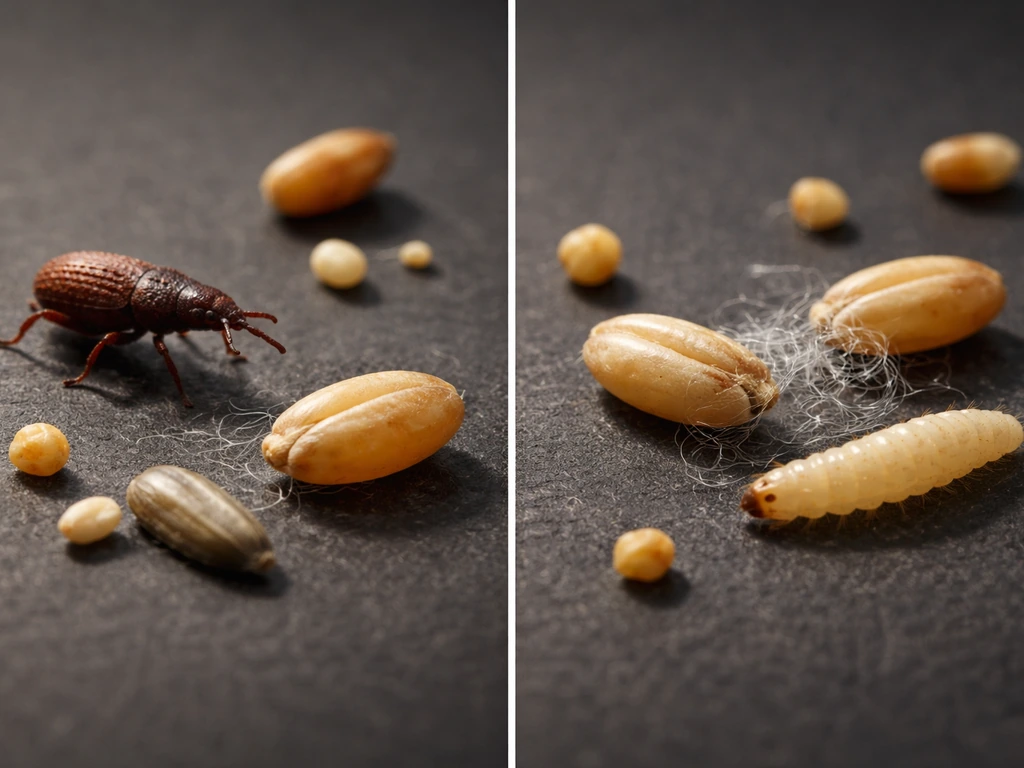
Before you do anything else, confirm you're dealing with weevils and not something else. The three stored-grain weevils you'll run into in bird seed are the granary weevil, rice weevil, and maize weevil. All three are small (roughly 2 to 3.5 mm long), reddish-brown to dark brown beetles with a distinctive long snout projecting from the head. That snout is the giveaway. If the bug you're seeing doesn't have one, you may be dealing with a different pest entirely.
The tricky part with weevils is that the larvae develop entirely inside the grain kernel. You won't see them crawling around like other bugs. What you will see is tiny round exit holes in seeds, fine powdery grain dust at the bottom of the container, and eventually adult weevils walking across the surface of the seed. If you crack open a sunflower seed or a corn kernel and find a soft, white, legless grub inside, that's the weevil larva. That confirmation tells you the infestation has been going on for a while.
Weevils vs. the usual lookalikes
| Pest | Size | Key feature | Where you'll see them |
|---|---|---|---|
| Grain weevil (granary/rice/maize) | 2–3.5 mm | Long snout, reddish-brown | Inside kernels and on seed surface |
| Indian meal moth larvae | Up to 12 mm | Caterpillar with legs, webbing | On seed surface and container walls |
| Flour beetle | 3–4 mm | Flat, no snout, reddish-brown | In fine grain dust and milled seed |
| Mold mites | Tiny (<1 mm) | Nearly invisible, dusty clusters | On wet or clumped seed |
If you're seeing silky webbing or small caterpillars, you're probably dealing with moths rather than weevils. The treatment steps overlap somewhat, but the biology is different enough that it's worth checking out a dedicated guide on how to get rid of moths from bird seed if webbing is your main symptom.
Stop the Spread Right Now
Containment comes first. Weevils reproduce fast and will move from one seed bag or bin to another if you give them the chance. Do these steps before you do anything else.
- Isolate everything: Pull every bag, bin, and container of seed out of your storage area and put them on a hard floor or outside. Don't let infested containers sit next to uninfested ones.
- Check every container: Look for adult weevils, exit holes in seeds, and powdery grain dust. Any container that shows signs gets set aside as infested.
- Bag and seal the infested seed: Pour it into a thick garbage bag, tie it tightly, and put it in an outdoor trash can with a lid. Don't compost it and don't leave it in an open bin.
- Don't shake or pour loosely: Moving infested seed carelessly spreads adults to new areas. Keep it contained until it's in the trash bag.
- Quarantine new or questionable bags: Any bag you're not sure about goes into a separate sealed tub until you've inspected it fully.
If you had any infested seed in or near your feeders, pull the feeders down immediately. Weevils feeding outdoors in your feeder are less of a household problem, but any seed left in a tray or tube feeder can reintroduce them to fresh seed you bring out later.
Clean Everything Thoroughly
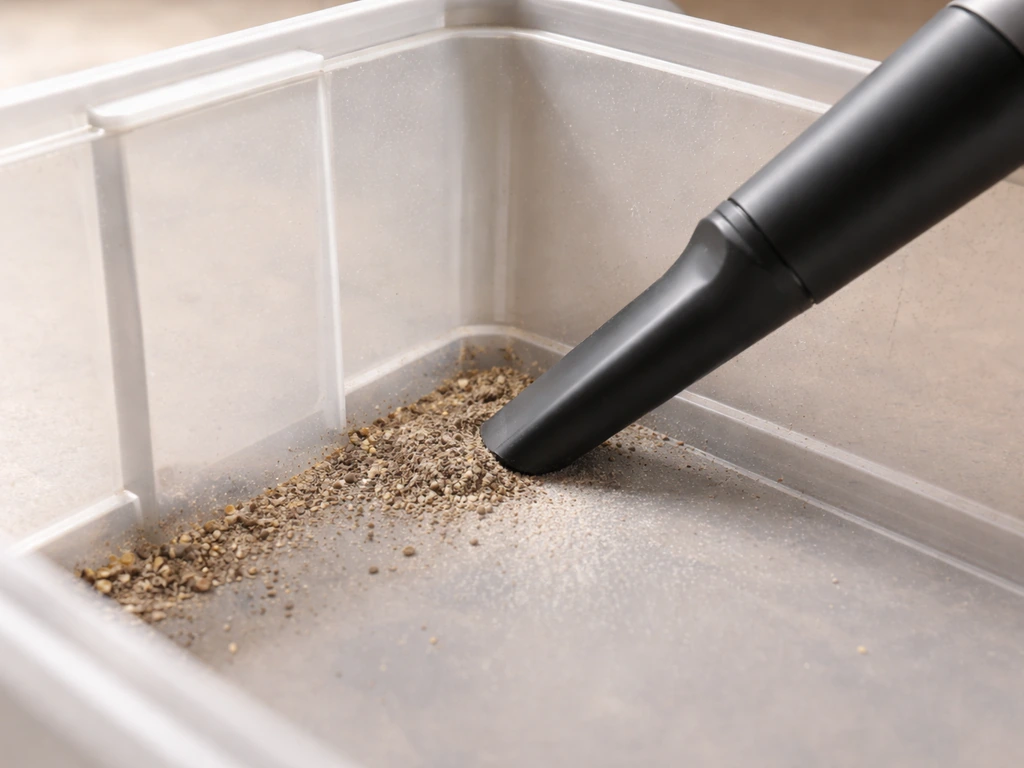
This is the step people skip, and it's why infestations come back. Weevil eggs and newly hatched larvae can hide in cracks, seams, and corners of bins, feeders, trays, and shelving. If you just throw out the seed and refill without cleaning, you're setting yourself up for round two.
Storage bins and seed containers
Empty the container completely and vacuum out every corner and seam. Then wash it with hot water and dish soap, scrubbing the inside surfaces. A 10% bleach solution (1 part bleach to 9 parts water) applied with a sponge and left for 10 minutes will kill any remaining eggs. Rinse thoroughly with clean water and let the container dry completely, at least 24 hours, before adding any new seed. Weevils thrive in moisture, so putting seed into a damp container defeats the whole exercise.
Tube feeders, platform trays, and hoppers
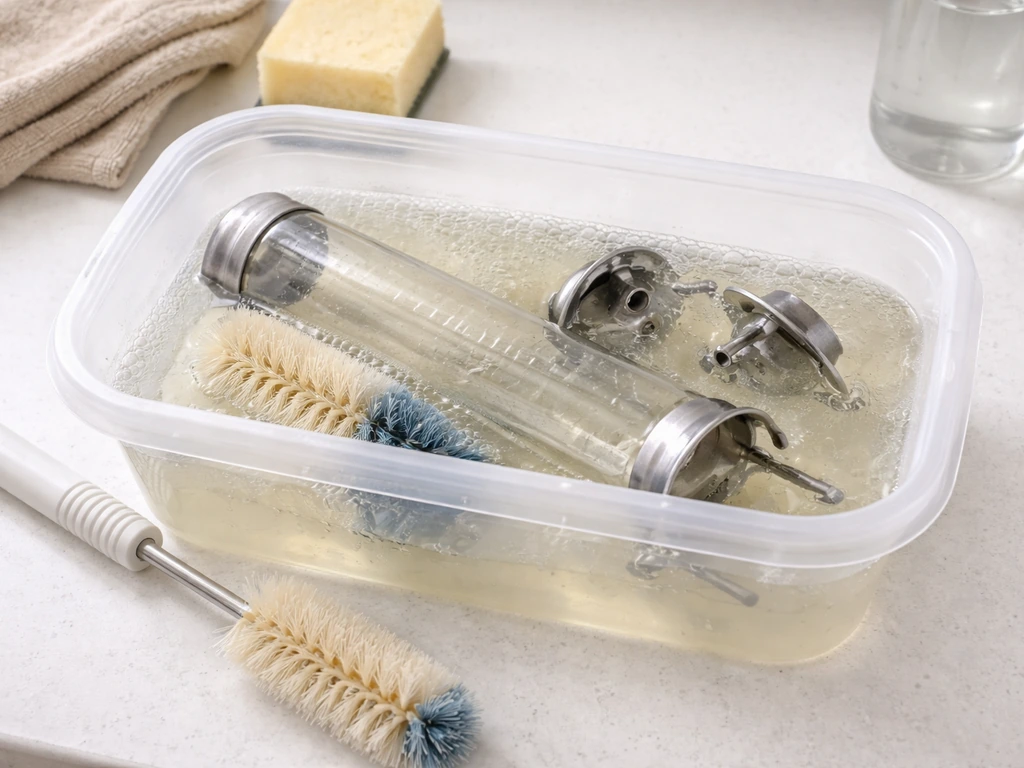
Disassemble your feeders as much as possible. Dump any remaining seed, then soak the feeder in the same 10% bleach solution for 10 to 15 minutes. Use a bottle brush or old toothbrush to scrub ports, perches, and tray edges where seed debris collects. Rinse well and let the feeder air dry fully before refilling. While you're at it, wipe down the area below each feeder and take stock of any spilled seed on the ground, because that material can be its own pest-attractant problem. For a full cleanup approach, how to clean up bird seed on the ground covers the ground-level side of this in detail.
Storage shelves and surrounding areas
Vacuum the shelves, floor, and wall edges of your storage area thoroughly. Weevils and their eggs can survive in the fine grain dust that accumulates in corners. Wipe down hard surfaces with a damp cloth, then let them dry before putting clean, sealed containers back. If your storage area is a garage or shed that gets humid, that humidity is part of your problem and you'll need to address it in the prevention step.
Treat Seed You Want to Keep
If you caught the infestation early and most of your seed looks fine, you have options for treating it before deciding to toss it. The two evidence-backed methods are cold treatment and heat treatment. Both work by killing weevil eggs, larvae, and adults at all life stages.
Freezing
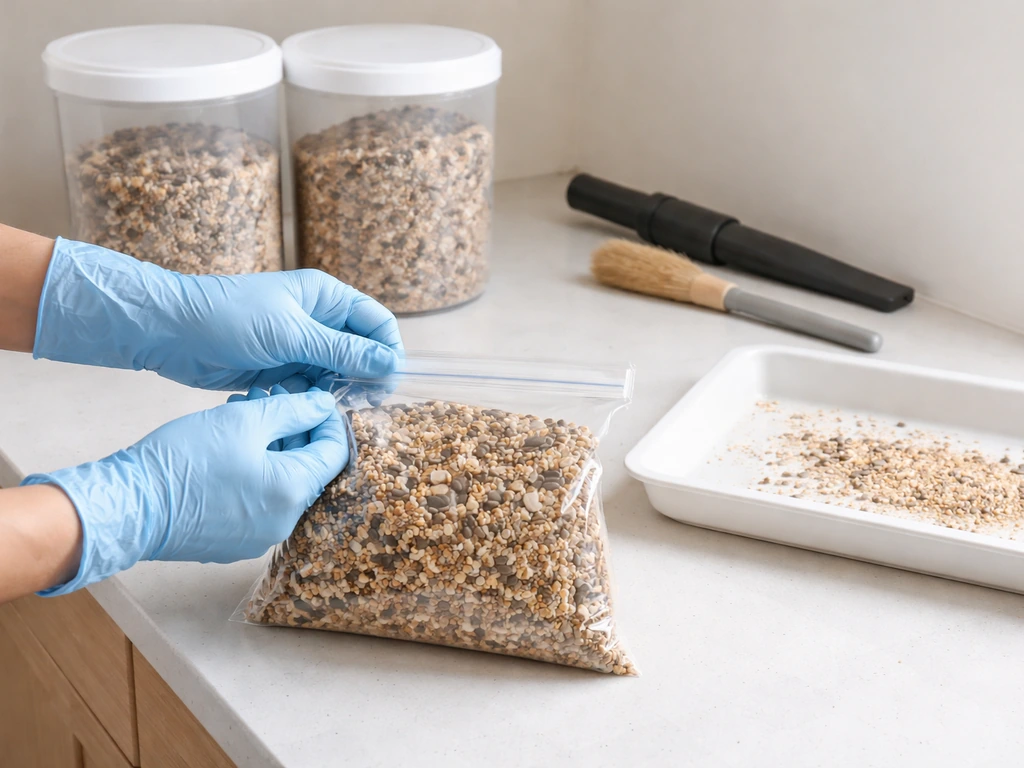
Seal the seed in a zip-lock bag or airtight container and put it in a chest or upright freezer set to 0°F (-18°C). Leave it there for at least 3 to 4 days. University extension research confirms that 0°F for 3 days kills all weevil life stages, and going to 4 days gives you a comfortable margin. After freezing, let the seed return to room temperature before opening the bag, so condensation doesn't form inside and wet the seed. Moisture in stored seed is a problem on its own, and if you've ever wondered can bird seed get wet, the short answer is that it leads to mold, clumping, and more pest problems.
Heat treatment
Spread seed in a single layer on a baking sheet and put it in an oven set to 130 to 140°F (54 to 60°C). Hold that temperature for 30 minutes at the lower end, or 15 minutes at 140°F. Use an oven thermometer to verify the actual temperature, because oven dials can be off by 20 to 30 degrees. Let the seed cool completely on the tray before storing it. One important note: heat treatment is only for bird seed you're putting out in feeders. Seed you intend to plant should not be heated or frozen, as both can reduce germination rates significantly.
Diatomaceous earth (food-grade only)
Food-grade diatomaceous earth (DE) is sometimes recommended as a storage treatment. It works mechanically, not chemically, by cutting through insects' exoskeletons and causing them to dehydrate. For bird-safe use, mix a small amount (roughly 1 cup per 50 pounds of seed) into stored seed that you've already confirmed is weevil-free, as a preventive measure. Do not dust DE directly into active feeders or on seed that birds are eating, because inhaling fine silica dust isn't good for birds or people. Keep it in the storage container, not in the feeder itself. Food-grade DE is the only appropriate type; pool-grade DE is chemically different and should never be used near bird seed or birds.
Storage Changes That Actually Prevent Re-Infestation
Weevil infestations in bird seed almost always come down to the same root causes: seed stored too long, containers that aren't truly airtight, and humidity in the storage area. Fix those three things and you're done with weevils for good.
Use genuinely airtight containers
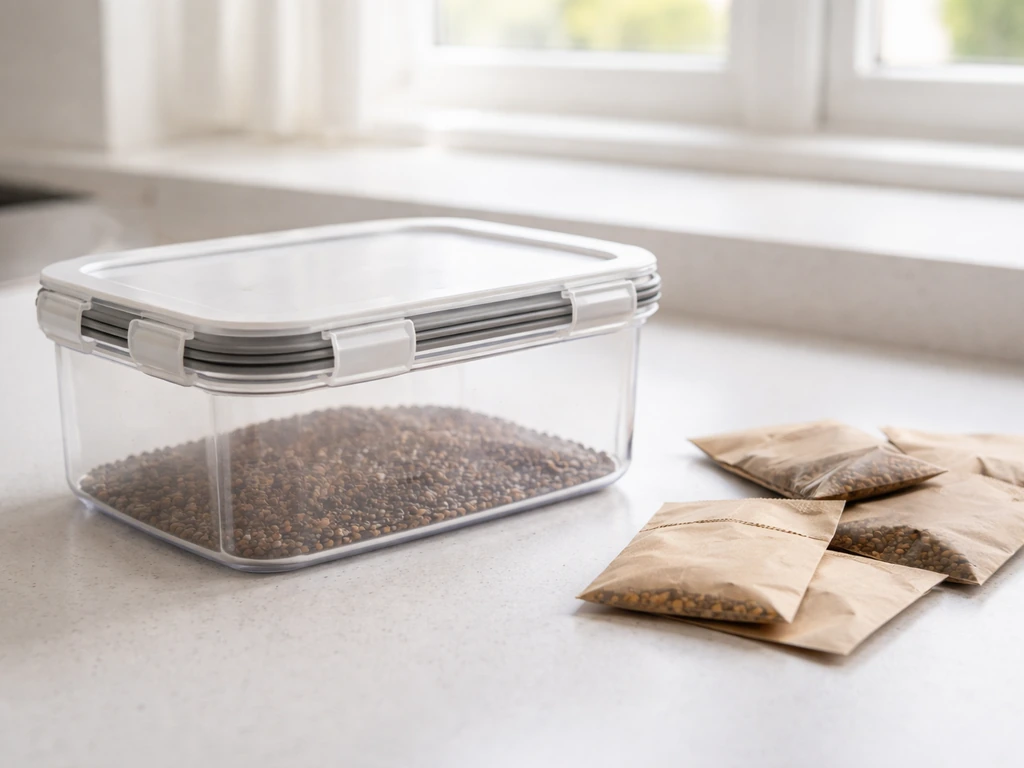
Paper bags and thin plastic bags are not weevil-proof. Adult weevils can chew through both. Move your seed into hard-sided containers with rubber-sealed lids, like food-grade plastic bins with locking lids or metal trash cans with tight covers. Gamma-seal lids on standard buckets are also a solid option. The container doesn't have to be fancy, it just has to physically prevent weevils from getting in or out.
Keep seed dry
Moisture is a major driver of grain pest activity and also encourages mold. Store seed in a cool, dry location with good air circulation. If your garage or shed gets humid in spring and summer, consider a small desiccant pack inside the storage bin. Avoid areas where temperature swings cause condensation on container walls. If you've ever had to deal with seed that got damp before it reached the bin, the guidance on what to do with wet bird seed explains how to handle that situation safely. The same principle applies to your feeders: keeping seed from sitting in moisture in the feeder itself is a key prevention step, and there are specific feeder setups designed for this purpose that are worth knowing about if you want to keep bird seed dry in feeders year-round.
Rotate your stock
Don't let seed sit for months. The longer seed is stored, the greater the chance that any weevil eggs already in it at the time of purchase will hatch and establish a population. A good rule of thumb is to buy no more than a 4 to 6 week supply at a time, and to use older seed before opening a new bag. When you add new seed to a bin, put it on the bottom and move the older seed to the top so it gets used first.
Your Ongoing Prevention Plan
Once your storage is clean and your seed is fresh, you need a simple routine to make sure weevils don't quietly establish themselves again while you're not looking.
- Inspect every new bag of seed before storing it: Look for weevil adults, grain dust, and tiny exit holes. Weevils often come in with purchased seed, especially if it was stored poorly before you bought it.
- Do a monthly bin check: Open your storage container, stir the seed, and look for adults on the surface. Catching a fresh infestation early is much easier than dealing with a full population.
- Clean feeders every 1 to 2 weeks: Residual wet or old seed in feeder tubes and trays is a breeding ground. A quick rinse and dry goes a long way.
- Don't let seed pile up on the ground: Spilled seed under feeders can harbor weevils and other pests. Rake it up regularly and dispose of it.
- Consider a bay leaf deterrent: Tucking a few dried bay leaves into your seed storage bin is a low-effort, bird-safe measure that some birders swear by. The research on effectiveness is limited, but it causes no harm and bay leaves contain compounds that deter many stored-product insects.
- Check storage area conditions seasonally: Humidity rises in summer and falls in winter in most climates. Check that your storage area is still dry and well-ventilated when seasons change.
The full workflow here, confirm the pest, contain and dispose, clean everything, treat or discard affected seed, fix your storage, and inspect regularly, sounds like a lot but most of it is a one-time effort. Get your storage right once and the ongoing maintenance is minimal. Weevils are predictable insects with predictable weaknesses: they need accessible grain, moderate warmth, and some humidity to thrive. Take those away and they don't come back.
FAQ
Can I freeze or heat bird seed if I want to use some of it for planting later?
Yes, but only if you take extra steps. You should never heat or freeze seed you plan to plant, since it can reduce germination. For backyard sprouting, the safer approach is to discard or treat only the seed meant for feeding birds, then replace with fresh seed for planting.
What should I do if I still see weevils after I clean the bins and feeders?
If you see active adults after cleaning, it usually means there was contamination in a seam or nearby feeder area, or the seed was not fully treated. Re-check for egg sources by shining a flashlight into container cracks, then repeat the full cleanout (vacuum, wash, bleach soak) and confirm the treated seed is airtight during the return-to-room-temperature step to avoid condensation.
Why do I need to let frozen seed return to room temperature before opening it?
Check the storage container after you bring it back to room temperature. If you open it while it is still cold, condensation can form and raise moisture, which increases mold risk and can make future infestations more likely. Let sealed seed warm up fully before opening.
Can I dust diatomaceous earth directly into bird feeders to kill weevils?
DE is not a quick kill for already-infested feeders. For ongoing safety and effectiveness, use food-grade DE only in the storage container after you confirm the seed is weevil-free, and keep it out of the feeder itself. If birds are already eating the dust you applied, stop using DE immediately and switch to cleanup plus airtight storage.
Is seed dust always a sign of a weevil infestation?
A small amount of fine dust in the bottom is a common sign of larvae activity, but it can also come from normal seed breakage. The deciding test is whether you find exit holes, adults, or soft white grubs when you crack a few kernels. If you find only debris without holes or adults, you may still have low-level contamination, so treat the whole batch as potentially infested.
Can I save the “good” part of a bag if only some seeds look damaged?
Remove and discard any seed that has exit holes, visible webbing, or larvae/grubs you find when you open kernels. If only a portion looks questionable, you can isolate and cold-treat that portion, but do not mix it back into the rest until you have confirmed it is clean and it has been stored airtight.
How do I make sure my freezer is cold enough to kill all weevil life stages?
If the freezer is slightly warmer than 0°F, eggs and larvae may survive. Use a freezer thermometer, target 0°F (minus 18°C), and keep the seed sealed and unmoved for the full 3 to 4 day window to cover all life stages.
What if I don’t see weevils but the storage area is humid?
If the storage area is humid, weevils can persist indirectly by making it easier for eggs to hatch and for seed to stay in conditions pests like. Add desiccant only where it will not contact birds, keep containers sealed, and focus on eliminating condensation, especially in garages or sheds during spring and summer.
Can weevils spread from one bird seed bag to another?
Yes, from nearby sources. Weevils can move between bags and bins if you keep them near each other without sealing, and they can also hitchhike on feeders that already have debris. Treat the whole storage zone, not just the one bag, and vacuum under feeders and around shelves.
Are paper bags or thin plastic bags okay for storing seed after treatment?
No. Paper bags and thin plastic bags are easy for adults to chew and escape from. For weevil control, transfer seed into hard-sided, tightly sealed containers with rubber seals or locking lids, then keep them off the floor and away from damp areas.
Next Articles
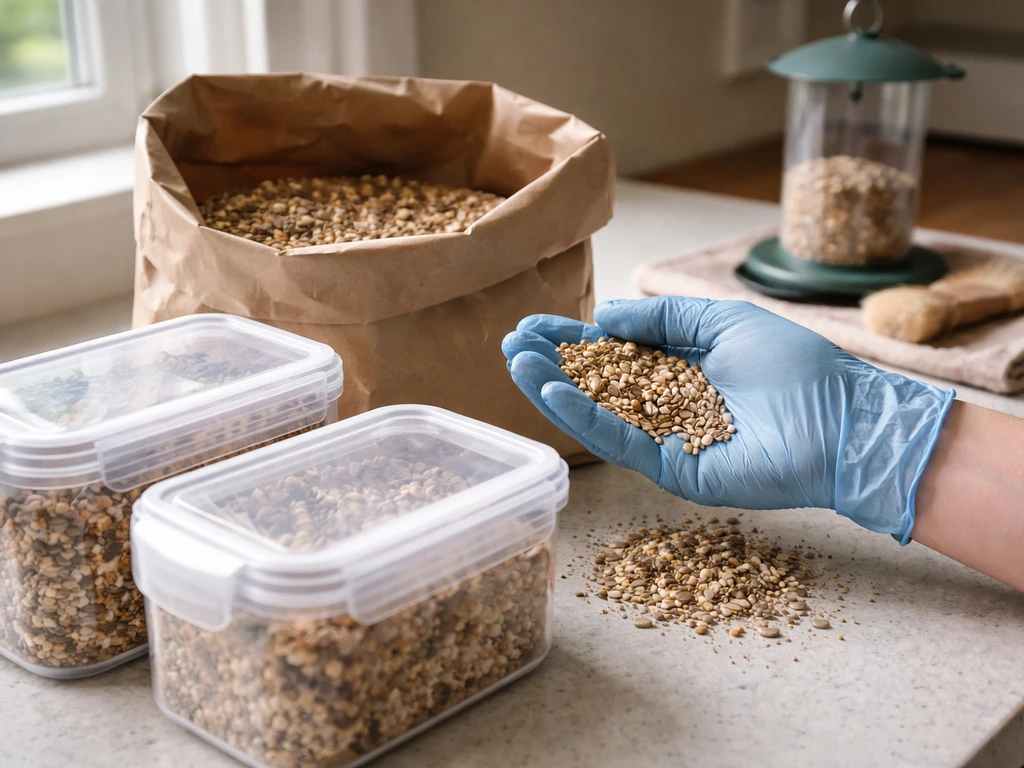
How to Get Rid of Moths From Bird Seed Step by Step
Step-by-step way to remove moths from bird seed, clean feeders, discard infested food, and prevent moths with proper sto
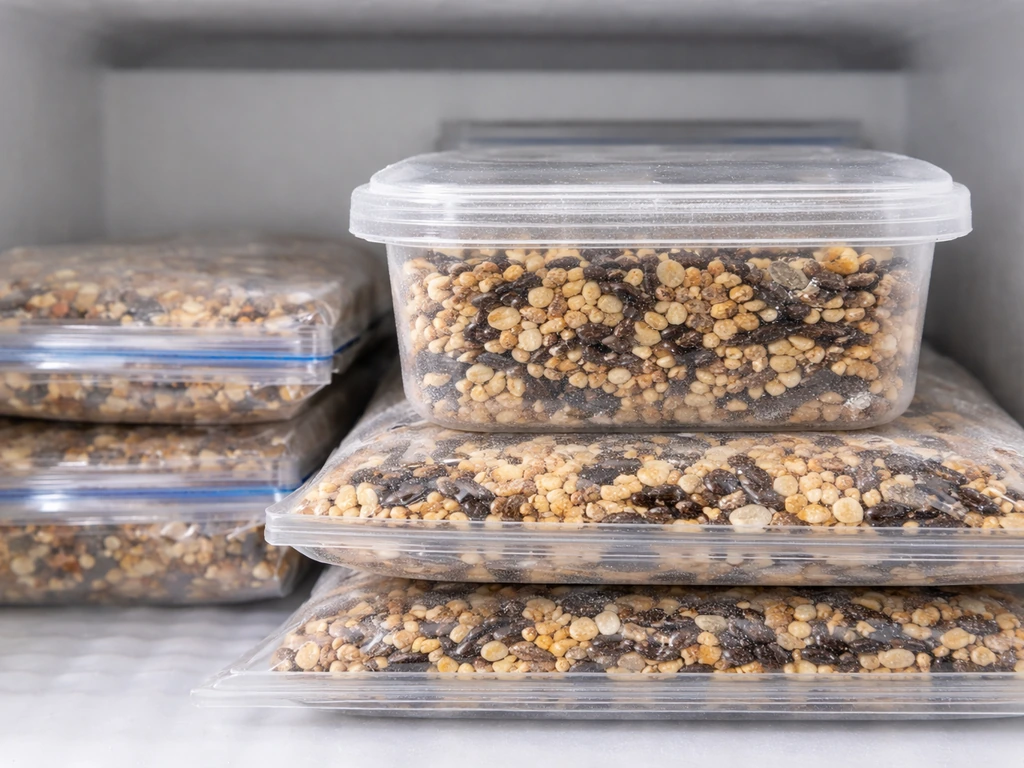
Can You Freeze Bird Seed? How to Freeze and Thaw Safely
Yes, you can freeze bird seed. Learn how to freeze, prevent clumping and moisture, and thaw safely by seed type.
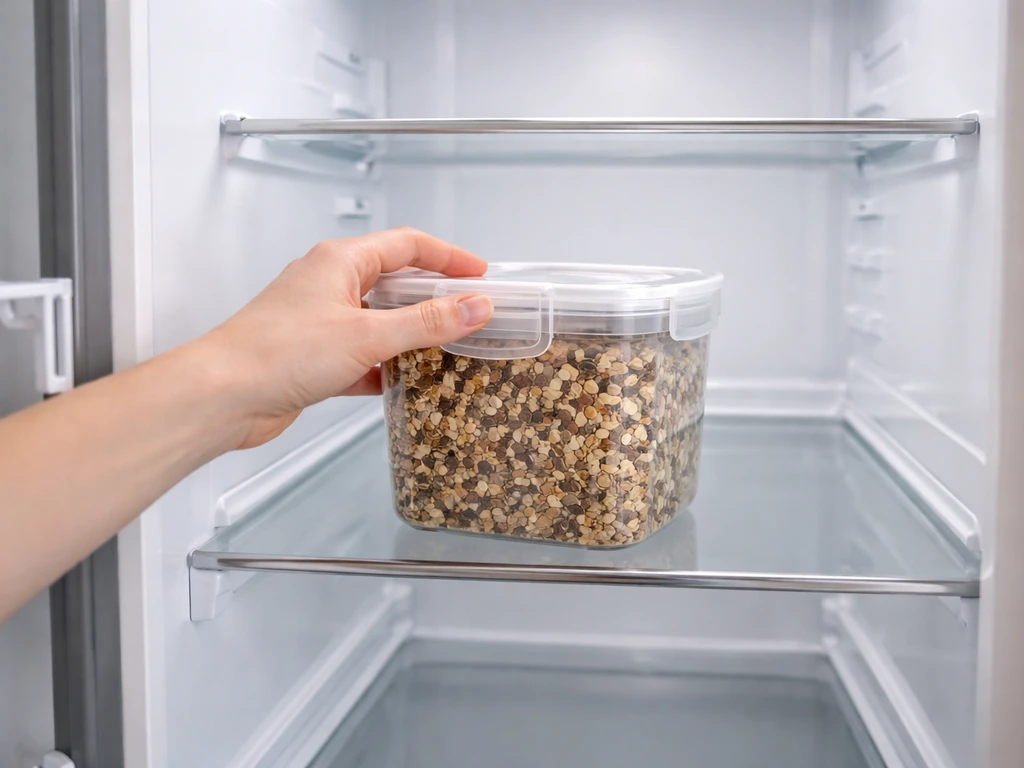
Can You Store Bird Seed in the Fridge Safely?
Get a clear answer on storing bird seed in the fridge, with airtight steps, moisture prevention, spoilage checks, and pe